


The Iron Ark by Ryan Loup-Glissant
Updated: Apr 12
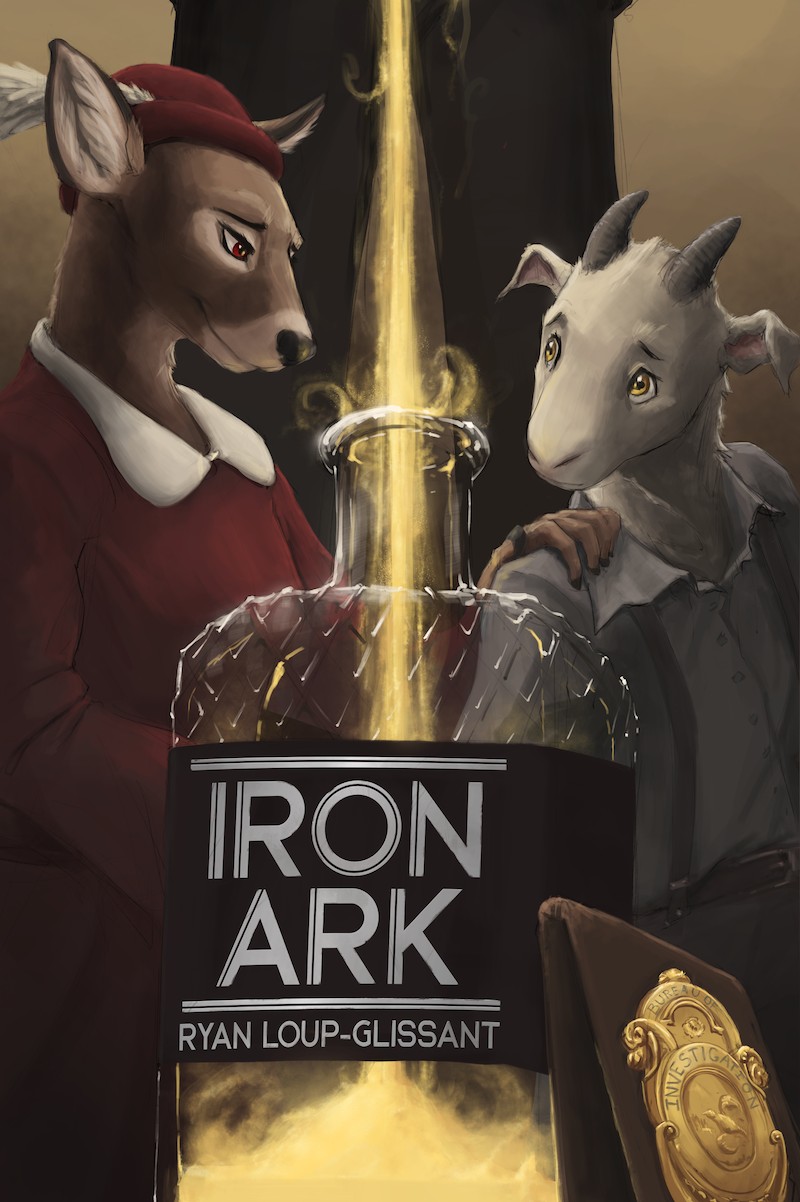
Topics: Vampires, Werewolves, LGBTQ+, The Great Depression
Genres: Supernatural, Historical
Age Rating: 18+ for one or two descriptive sex scenes
Available in Print
You may want to continue this series if you:
-Are interested in the history of the great depression
-Want to see that history, but with werewolves and vampires
-Are wondering where Crawford, Celeste, and Samson went at the end of The Dry Spell
-Are interested in seeing more about the carnivore and vegetarian divide
-Want to see Donovan squirm a bit
Review Summary:
The Iron Ark is a worthy sequel to one of the best furry books out there. It elevates the plot structure from the first book, bringing multiple threads together over time with a few great twists and turns for good measure. The issues of the great depression are mixed perfectly into this ongoing vampire and werewolf story. No status quo has remained unchanged by the ten years that have passed since The Dry Spell, and new characters bring fresh conflict and higher stakes for the main cast. This book has successfully left me on the edge of my seat to see what happens in the next entry.
Full Review:
The Dry Spell is one of my favorite furry reads of all time. It's one of the first books I recommend to people who are just getting into furry fiction because it anchors the possibly unfamiliar concept of furry into the familiar history of prohibition and the familiar myths of vampires and werewolves. Now it's ten years later, and that familiar history has shifted to the 1930s. The Great Depression has taken hold of the United States, and all our favorite characters from the first book are making their way through it, whether it be on their feet or on their hands and knees.
Crawford, Celeste, and Samson have found themselves somewhere in the middle. They're living in a run down house somewhere near Boston. There, Crawford has settled into his werewolf routine and Celeste and Samson have a cage full of rats they can drink blood from. How lovely. It's not the best situation, but they have a little private investigation business going, and they're making do. They've even been given the well-paying job of tracking down the remaining ark nails from Donovan's ill-fated steel working conspiracy to make sure they can never be used again.
But new problems soon come for each of them. First, Sandy returns to give them the upsetting news that Donovan has escaped her, and that they need to find the rest of the Ark nails quickly. Meanwhile, Crawford finds out his son has joined up with a group of powerful traveling racists who blame the great depression on "the veggie menace". Plus Samson, who was bitten in the last book as a 12 year old and is now a 22 year old trapped in a child's body, is so frustrated with his condition that he begins starving himself to grow older, and becoming unstable as a result.
Far away, Donovan is out for revenge against the Martyrs who betrayed him, seeking to lure them into a trap and kill as many as he can. It's immensely satisfying to see Donovan brought low and awkwardly stumble his way haphazardly toward vengeance. But during his pursuit, he encounters a new malevolent player in this game that will no doubt pose a huge threat to all, and change the course of the whole story.
The book sets up a whole lot of threads right from the start, just like in the first book. In this way, it has a similar structure to the first, but I think executes that structure even better, slowly drawing these threads together over time with a few shocking twists here and there for good measure. Some of those threads even seem completely unrelated to the rest of the story and will only come to shocking relevance later down the line. I don't think I've ever met anyone who wasn't a fan of that story trick. So if you enjoyed how the plot of The Dry Spell played out, I think you'll find this to be a step up on that front.
The new characters are all welcome additions who bring a lot to the story. There's Crawford's son, Lucas, who has abandonment issues from Crawford leaving his family. He now travels with that group of racists to feel some of that paternal support from its leader that he never got as a cub. Samson, who technically was in the last book but comes into his own as a character here, brings some youthful energy to the group. And by "youthful energy" I mean the frustration and anger that comes with being trapped in a child's body, unable to grow and never being being seen as an adult by anyone around him. Then there's the all important mystery character who adorns the back cover of the book--an insidious new threat that seems to have raised the stakes of the story. You'll have to read to discover for yourself what that guy's all about.
What I think I love most about this book is how it leaves no status quo unchanged. After ten years, hardly anything is still in the same condition as it was at the end of The Dry Spell. It's interesting to see where characters ended up, and where they have yet to go. I mean even beyond what I've said already, Charlie is an official in the newly-formed FBI, and one of the three witch sisters died offscreen and left the witches with impaired future sight, and even the Martyrs have entirely new goals in play. No one has been left unscathed in the past ten years. The theme of how both people and monsters change with the turn of history is more apparent in this book than ever.
There's also a lot of surprising theming around coming of age, and the terrible mistakes that can be made when entering new adulthood. Samson, despite being an adult inside, is still seen as a child by all around him, and even Celeste can't stop thinking of him as one. This causes him to make bad choices that often end in blood. Meanwhile, Lucas has trouble moving beyond his lack of self-worth stemming from his abandonment, but even the paternal leader of the racist troupe he's joined treats him like he can't do anything right despite also saying he has great potential (classic abusive relationship there). I loved seeing how this frustration of new adulthood manifested in these different monsters, both human and otherwise.
So just like with The Dry Spell, I was happy to see the use of strong themes continue into this sequel, and even happier to see how much they spurred on the development of these new characters. Gotta love it when themes have a tangible impact like this.
The Iron Ark's biggest strength is in its new characters--specifically how our current cast of characters react to and deal with them. Everyone has to deal with new faces as the decade turns, and each new face is a catalyst for change that brings exciting new potential for the series. I can't wait to see what's next.


Comments